
India's exports experienced their steepest fall in five months, declining by 7.44 per cent in March to $38.92 billion, primarily due to trade uncertainty and geopolitical tensions, with shipments to West Asia contracting by over 50 per cent.
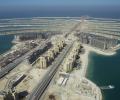
Ongoing geopolitical tensions in West Asia have slowed deal momentum in Dubai's luxury residential market, but Indian high-net-worth individuals (HNIs) are not exiting their marquee assets, with any 'discounted' resale deals attributed to investor liquidity stress rather than geopolitical flight.

The Ministry of External Affairs (MEA) reports that over 1,150 Indian nationals have been evacuated from Iran through land borders into Armenia and Azerbaijan since the start of the West Asia conflict. The MEA also confirmed that three Indians were injured in attacks in the UAE.
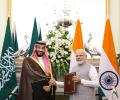
Prime Minister Narendra Modi spoke with Saudi Arabia's Crown Prince Mohammed bin Salman about the ongoing conflict in West Asia, emphasising the need to ensure freedom of navigation and secure shipping lanes.

Non-resident Indians (NRIs) in the Gulf region are increasingly purchasing term life insurance policies from India, driven by geopolitical uncertainties in West Asia and the significant cost advantages offered by Indian products, with the GCC region now contributing over half of the total NRI demand.

India successfully facilitated a significant diplomatic meeting between Iranian President Masoud Pezeshkian and UAE Crown Prince Sheikh Khaled bin Mohamed bin Zayed Al Nahyan on the sidelines of the BRICS Summit in New Delhi. This interaction, a diplomatic breakthrough given ongoing West Asia conflicts, occurred as BRICS adopted a declaration urging restraint and protection of civilians in the region, highlighting the bloc's commitment to peace and stability.

India's finance ministry anticipates inflation will remain relatively contained in the coming months, supported by a correction in crude oil prices and softening input costs following the cessation of the West Asia conflict, despite earlier spikes in wholesale and retail inflation.

The Saudi-led coalition issued a stern warning to Yemen's Houthi rebels after intercepting a drone targeting Mecca, Islam's holiest city. Describing it as a "hostile and terrorist act," the coalition declared the security of holy sites a "red line" and vowed deterrent measures. This incident marks a significant escalation in the ongoing conflict, with both sides exchanging accusations of military operations and civilian targeting.

Prime Minister Narendra Modi met Iranian President Masoud Pezeshkian at the SCO summit, advocating for dialogue and diplomacy to resolve the West Asia conflict and expressing India's desire to expand and diversify trade with Iran. Pezeshkian, in turn, urged India to leverage its contacts to promote peace.

United States Central Command (CENTCOM) forces have conducted a 'heavy wave of strikes' against numerous Islamic Revolutionary Guard Corps (IRGC) targets in Iran. This action was a direct response to attempted Iranian missile strikes on US forces in West Asia, which were successfully intercepted. The strikes targeted IRGC military command centres, missile and drone facilities, coastal surveillance, and maritime capabilities, aiming to reduce threats posed by Iran and its proxies. US President Donald Trump also issued strong warnings to Tehran, linking the escalation to a recent drone strike on an LNG vessel in Egypt's Damietta Port.

There is no cause for concern, as the overall situation arising out of the crisis is firmly under control, the Centre informed while briefing political parties at the all-party meet.

Civil Aviation Minister Kinjarapu Rammohan Naidu stated that no decision has been made regarding allowing Delhi and Mumbai airport operators to own and run airlines, as the government is carefully considering the implications of relaxing cross-ownership restrictions, including potential conflicts of interest and the need for more airlines.
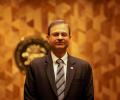
The Reserve Bank of India's Monetary Policy Committee (MPC) has commenced its three-day meeting, with a majority of economists and bankers anticipating a 25 basis point rate hike to counter escalating inflation risks, particularly from West Asia conflicts.

External Affairs Minister S Jaishankar stated that using terrorism as an "instrument of statecraft" is unacceptable and cannot be justified. He highlighted that terrorism persists because some states do not exhibit "zero tolerance" and allow political calculations to override historical lessons. Speaking at an event, Jaishankar emphasised the indivisibility of peace and called for stronger global resolve to counter terrorism in all its forms.

The BRICS grouping adopted a consensus joint declaration in New Delhi, successfully navigating differences on the West Asia conflict but notably omitting any direct mention of US strikes on Iran or Iranian military attacks on Gulf Arab nations. The declaration also criticised Israel's actions in Gaza and called for a concerted approach against terrorism.

Pakistan's Prime Minister Shehbaz Sharif used his UN General Assembly address to thank former US President Donald Trump for his "timely intervention" in the 2025 conflict with India, a claim India consistently denies. Sharif also raised the Kashmir issue and discussed the Indus Waters Treaty, while touting Pakistan's role in mediating US-Iran peace.

The US-Israeli military campaign, dubbed "Operation Epic Fury" by Washington, has entered its third day, with US President Donald Trump stating that operations would continue "until all of our objectives are achieved."

Lieutenant General Apti Alaudinov, deputy chief of the Russian Armed Forces' Main Military-Political Department, has warned that the escalating conflict in West Asia could lead to Israel ceasing to exist as a state, accusing Israel of seeking to widen the confrontation to involve the US and NATO.

Economy passengers are paying more year-on-year while business travellers are paying less.
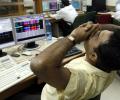
Indian benchmark equity indices Sensex and Nifty experienced a significant crash in early trade, triggered by a sharp increase in crude oil prices and escalating tensions in the Middle East.
Hezbollah is upset that the IDF exposed their plans to massacre Israelis, so they decided to target innocent civilians by firing a barrage of rockets, the IDF further said.

Indian equity benchmark indices Sensex and Nifty experienced a significant tumble in early trade, primarily driven by elevated crude oil prices due to ongoing West Asia uncertainty and substantial foreign fund outflows. Track Sensex, Nifty on September 29.

India's foreign exchange reserves have surged by $12.42 billion, reaching a new all-time high of $729.33 billion for the week ended August 21, driven by increases in foreign currency assets and gold reserves.
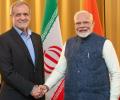
Prime Minister Narendra Modi has welcomed the understanding between the United States and Iran to end the conflict in West Asia, expressing hope that the pact will restore peace, stability, and ensure freedom of navigation in the region. The deal, aimed at ending a 107-day war that caused a global energy crisis, is set for signing on June 19.
The Iran conflict led to a sharp correction in Reliance Industries Ltd's (RIL's) share price, which has been partially reversed by a rebound.

The Asian Development Bank (ADB) has revised down India's GDP growth forecast for fiscal year 2026-27 (FY27) to 6.6 per cent from an earlier 6.9 per cent, primarily attributing the change to elevated energy prices stemming from the Middle East conflict. Despite this moderation, India is still expected to remain the world's fastest-growing major economy.

Two Indian nationals have been confirmed dead and one is missing following attacks on merchant vessels amidst the ongoing conflict in West Asia. The Indian government has reiterated its commitment to the welfare of its citizens in the Gulf region.

'India should not trade away its energy security for temporary tariff relief. Neither signing a trade agreement nor stopping Russian oil purchases can protect it from future US action.'

Iranian President Masoud Pezeshkian on Monday called for "regional unity" as he met top defence officials from Saudi Arabia, Turkiye and Pakistan in Tehran to discuss the regional situation, amid escalating tensions in the region.

The Reserve Bank of India's recent measures, including a dedicated dollar window for state-run oil marketing companies and tightened foreign exchange derivative rules, are expected to provide near-term relief to the rupee's depreciation, but market participants believe global factors and balance of payment dynamics will continue to exert pressure in the medium term.

The Indian Road Transport Ministry has amended the Central Motor Vehicles Rules to permit flex-fuel vehicles capable of running on up to E100 (nearly pure ethanol), a move aimed at reducing dependence on imported crude oil and promoting alternative fuels.

Iranian President Masoud Pezeshkian concluded his visit to India for the 18th BRICS Summit, announcing that Iran and the UAE agreed to move past previous tensions. This diplomatic breakthrough occurred during talks with Abu Dhabi's Crown Prince on the summit sidelines. Pezeshkian also met with PM Modi to discuss bilateral ties and West Asia developments, with Modi emphasising dialogue for regional peace. The BRICS summit adopted the New Delhi Declaration 2026, calling for global governance reforms and de-escalation in West Asia.

'If the war continue for a longer period of time, it is just a matter of time before the government will pass on some of the price increases.'

Prime Minister Narendra Modi on Thursday discussed with a group of senior ministers the prevailing global security situation and how to maintain supply chain uninterrupted despite conflicts in different zones, including the Strait of Hormuz, the Black Sea, the Red Sea, and the Gulf of Aden.
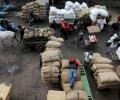
Moody's Analytics predicts India will remain the fastest-growing major economy in 2026 and 2027, but its pace will moderate due to a global slowdown, geopolitical risks, and financial market volatility, despite the boost from AI demand.

The Indian rupee depreciated by 43 paise to close at 94.81 against the US dollar, influenced by a negative trend in domestic equity markets, surging crude oil prices, and significant foreign institutional investor outflows.

Navy Chief Admiral Dinesh K Tripathi revealed that the Indian Navy was on the verge of striking Pakistan during Operation Sindoor following the Pahalgam terror attack, but kinetic actions were stopped. He also discussed the impact of the West Asia conflict on maritime traffic.

Larsen & Toubro (L&T) reported a 14 per cent year-on-year increase in Q1 FY27 profit attributable to owners, reaching Rs 3,926 crore, surpassing analyst estimates, despite facing significant supply-chain disruptions in West Asia.

The Indian Navy is enhancing its operational capabilities across all domains, including air, underwater, AI, and quantum technology, to become a multi-domain network force. Vice Chief of Naval Staff, Vice Admiral Ajay Kochhar, highlighted lessons from recent conflicts, the exploration of directed-energy weapon systems, and significant procurement plans, including 42 new platforms on order and RFPs issued for LPDs and next-generation frigates. The Navy's focus on indigenous innovation and technology absorption, guided by "scale, sophistication, speed, and spiral development," aims to meet evolving operational requirements and protect maritime interests, especially amidst ongoing global crises.
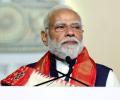
Congress leader Rahul Gandhi has criticised Prime Minister Narendra Modi's call for citizens to make economic sacrifices in response to the West Asia conflict, calling it 'evidence of failure'. Gandhi accused Modi of shifting responsibility onto the public and being incapable of running the country.
